Beyond the Installation: Building Technical Excellence

From commissioning to NFPA inspection requirements, discover how Door Systems equips dealers to support smoke and fire curtain systems throughout their entire service life.
When people think about life safety products, they often focus on the finished installation. What they don’t always see is the training that happens long before a product arrives on the job site.
At Door Systems, we believe that investing in people is just as important as investing in products. That’s why we regularly welcome our dealer partners from across North America to our headquarters in Placentia, California, for hands-on technical training.
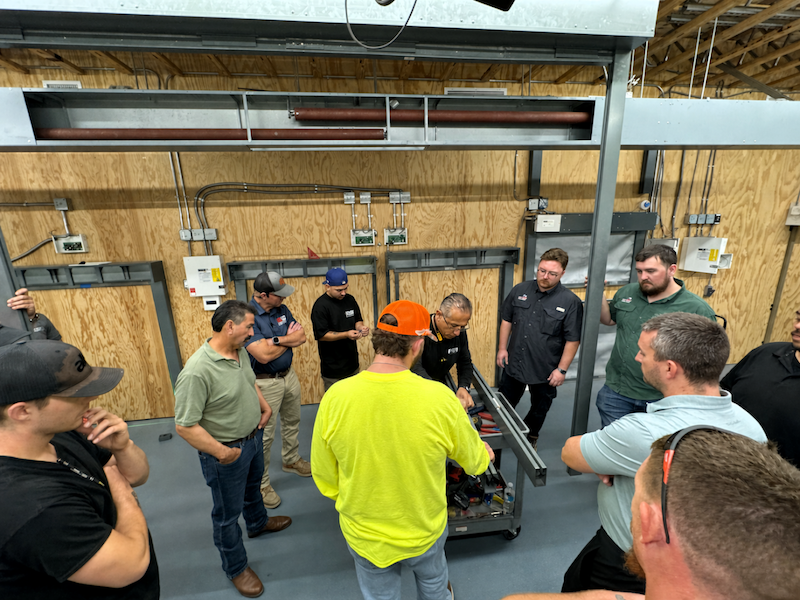
Luis Paredes, Sr. Field Tech – Leading Class
These sessions are more than a product demonstration. They are an opportunity for installers, technicians, and project teams to gain a deeper understanding of smoke and fire curtain systems through real-world, hands-on experience.
Our technical training covers every stage of the process, including:
- Product operation and system functionality
- Mechanical installation best practices
- Electrical setup and commissioning
- Troubleshooting and diagnostics
- Preventative maintenance and service
- Inspection, testing, and documentation requirements
- Open discussions with our engineering and technical support teams
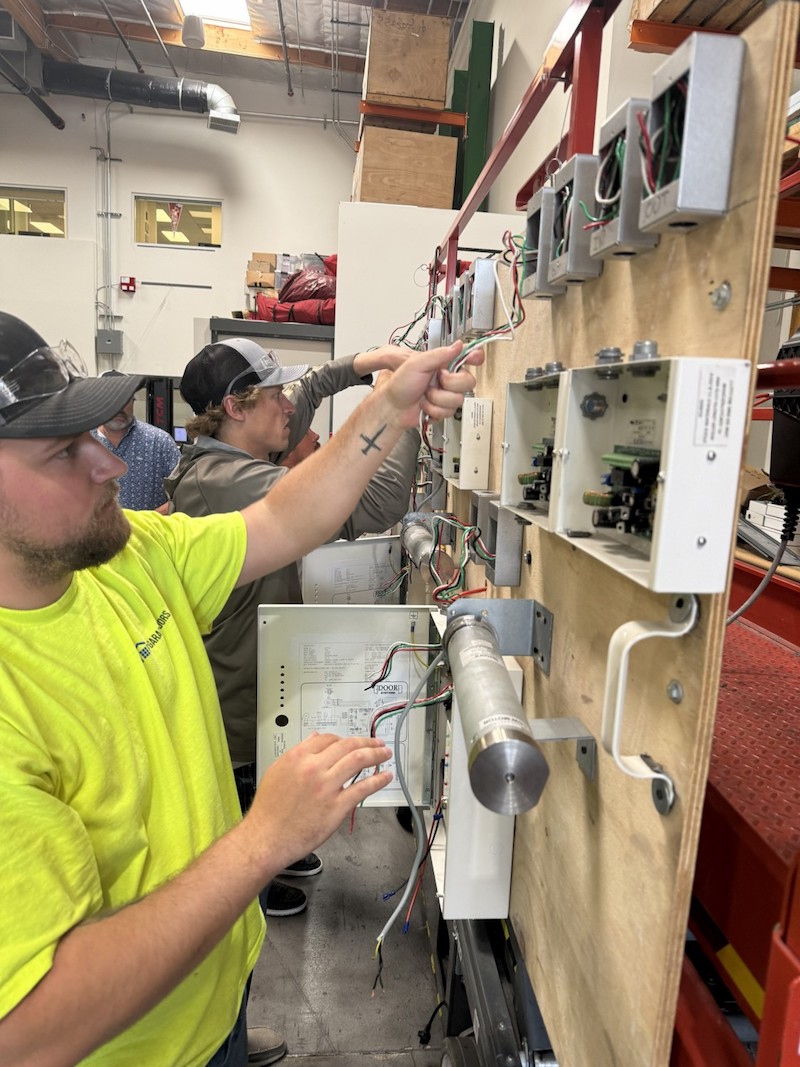
Hands on Electrical Training
Why Training Matters Beyond Installation
Every project presents its own unique challenges. By training together in a controlled environment, our dealers gain the confidence to solve problems before they become costly issues in the field. The result is faster installations, smoother commissioning, and greater confidence for owners, architects, contractors, and Authorities Having Jurisdiction (AHJs).
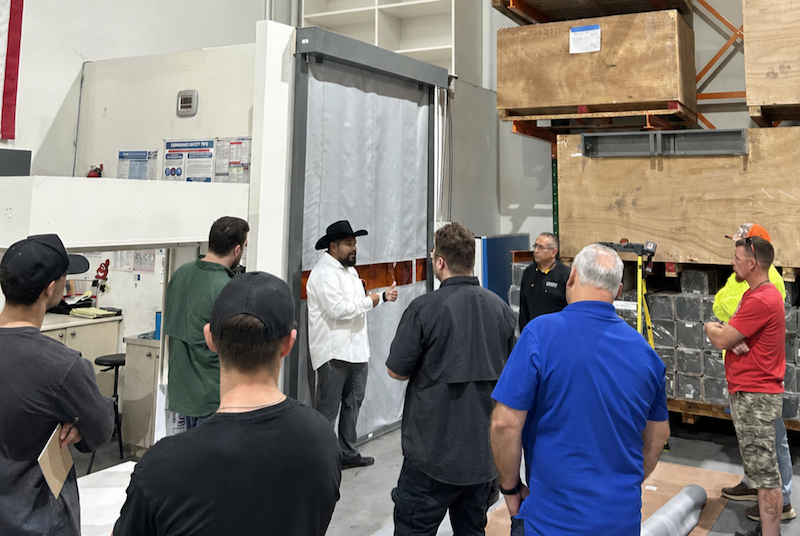
Salvador Perez, describing Elevator Safety Code
Just as importantly, our training emphasizes the importance of maintaining these systems throughout their service life. Smoke and fire curtain assemblies are opening protectives that require periodic inspection, testing, and maintenance to continue performing as intended.
Door Systems’ technical curriculum incorporates guidance from nationally recognized standards.
Want to learn more?
Check out:
NFPA 105 Chapter 8 – Smoke-Protective Curtain Assemblies
https://link.nfpa.org/publications/105/2022/chapters/8#ID001050000308
NFPA 105 Chapter 9 – Smoke-Protective Curtain Assemblies for Hoistways https://link.nfpa.org/publications/105/2022/chapters/9#ID001050000439
NFPA 80: Standard for Fire Doors and Other Opening Protectives
For fire-rated curtain systems, we also discuss the requirements contained in Chapter 21, Fire Protective Curtain Assemblies. This chapter outlines the inspection, testing, and maintenance expectations for fire protective curtain assemblies, helping owners, facility managers, and service providers understand their responsibilities after installation and throughout the life of the system.
Learn more:
NFPA 80 Chapter 21 – Fire Protective Curtain Assemblies
https://link.nfpa.org/publications/80/2022/chapters/21#ID000800001752
By introducing these standards during technical training, our dealers gain a better understanding of not only how to install Door Systems products correctly, but also how to support building owners with ongoing inspection and maintenance programs that help keep their life safety systems operating as designed.
By familiarizing our dealer network with the latest NFPA guidance, we help ensure installations are not only code compliant on day one, but continue to perform as intended throughout the life of the building. We believe technical excellence extends well beyond project completion, and our training is designed to prepare dealers for every phase of a system’s lifecycle, from commissioning through long-term inspection, testing, maintenance, and service.
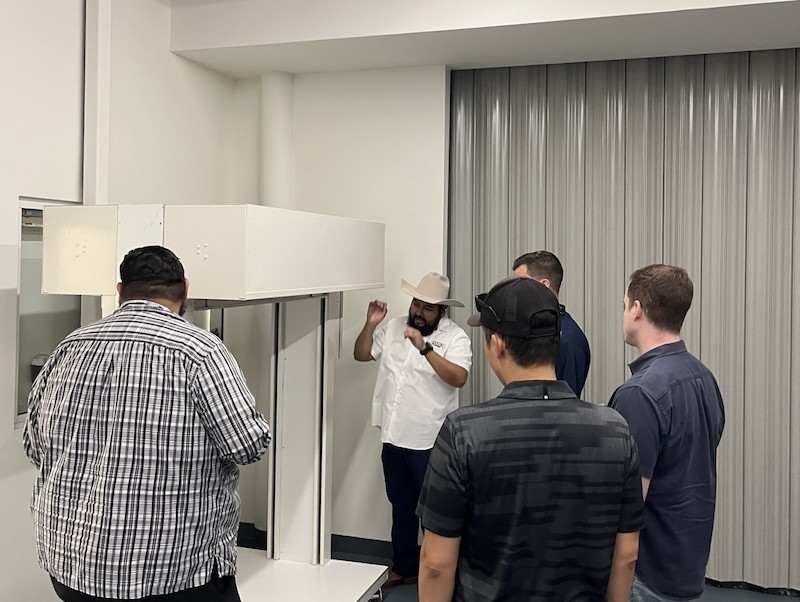
Salvador Perez, Describing the difference between NFPA 80 to 105
Building a Stronger Dealer Network
One of the greatest benefits of these training sessions is the collaboration. Dealers share lessons learned from projects across the country, discuss new applications, and exchange ideas that ultimately improve the experience for everyone involved.
As smoke and fire curtain technology continues to evolve, ongoing education becomes increasingly important. Building codes change. Product capabilities advance. Industry standards are updated. Staying current ensures our dealer network is prepared to deliver reliable, code-compliant life safety solutions on every project.
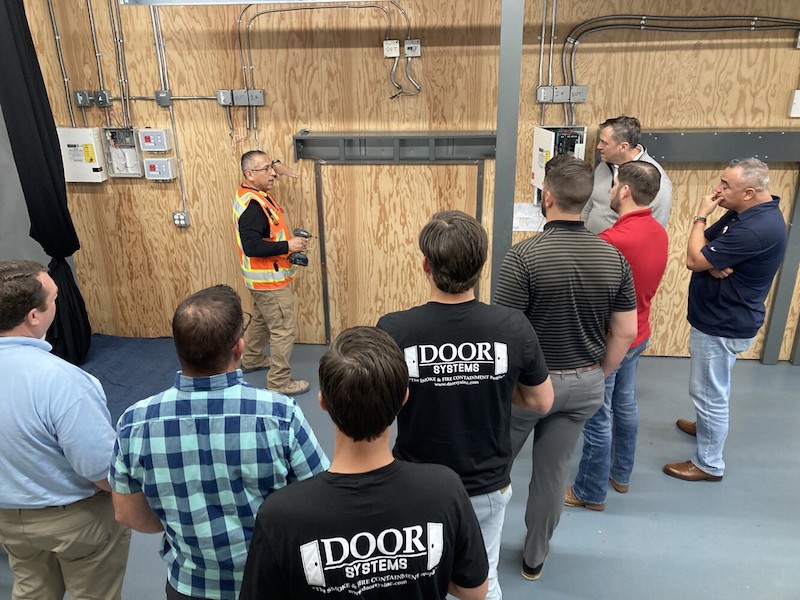
Luis Paredes, Sr. Field Tech- Installation Training
Technical training isn’t simply about earning a certification. It’s about building expertise, strengthening partnerships, and creating a network of professionals committed to protecting lives, preserving architectural design, and supporting building owners long after the project is complete.
At Door Systems, we’re proud to invest in our dealer network because well-trained technicians don’t just install better systems. They help ensure those systems continue protecting occupants for years to come.
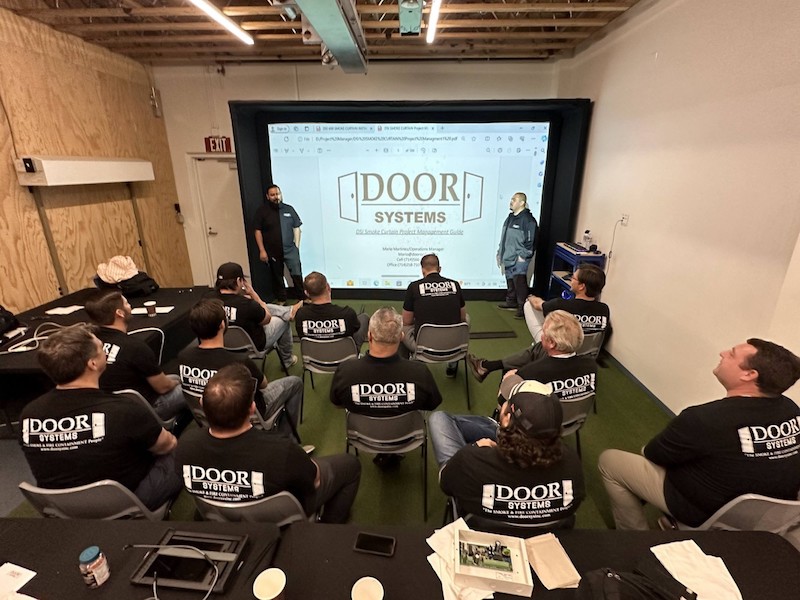
Operations Manager, Mario Martinez, Leading a Session
https://doorsysinc.com/smoke-and-fire-curtains/tech-training/