Still Need AIA CEUs Before the Deadline?

Still Need AIA CEUs Before the Deadline? We’ve Got You @ DSI
If you’re in the #AEC world, you know how quickly the year can get away from you.
One minute you’re deep in submittals and site visits… and the next you’re staring at your AIA continuing education tracker, realizing you’re a few credits short.
No stress. Door Systems, Inc. ® offers On-Demand AIA courses you can take anytime, anywhere, 24/7.

Door Systems AIA Classroom
Designed for Busy Architects & Project Teams
The American Institute of Architects (AIA) accredited courses are built specifically for professionals working with fire-rated smoke containment systems and related code requirements. Each OnDemand course is straightforward and practical:
- Watch a short video
- Complete a quick quiz
- Earn your AIA credits from your home or office
No travel. No scheduling headaches. Just solid learning when and where it fits your day.
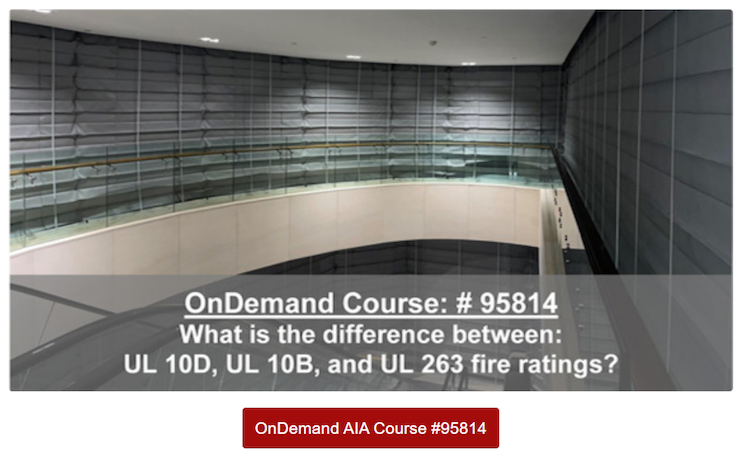
What is the difference between UL 10D, UL 10B, and UL 263 fire ratings?
This nano course explains the different ratings of Fire and Smoke Fabric Curtains.
Learning Objectives
- Discuss UL 10D- Fire-Protective Curtain Assemblies
- Discover what the ANSI/UL 10B- Standard for Fire Tests of Door Assemblies means for Fire and Smoke Fabric Curtains.
- Review which wall openings need to be rated to ASTM E119 or UL 263.
HSW Justification
Fabric Curtain Systems can serve as critical opening protectives in all five IBC Walls, protecting the health, safety, and welfare of occupants from fire and dangerous hot gases.
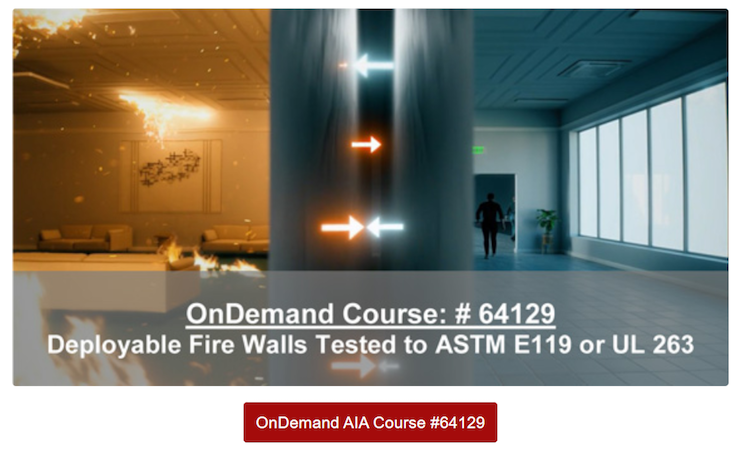
Deployable Fire Walls Tested to ASTM E119 or UL 263
This nano course explains why openings in fire barrier walls are limited in size unless tested to the same fire-resistance rating as the wall itself.
Learning Objectives
- Describe the 25% rule found in IBC Section 707.6 for Fire Barriers and how opening protectives tested in accordance with ASTM E119 or UL 263 meet the fire-resistance rating of a wall.
- Discuss the testing standard, ASTM E2226- Standard Practice for Application of Hose Stream
- Review what an ASTM E119 or UL 263 label means for Fire Fabric Curtains.
HSW Justification
Fabric Curtain Systems can function as opening protectives in fire barrier walls, protecting occupants from fire and hazardous hot gases.
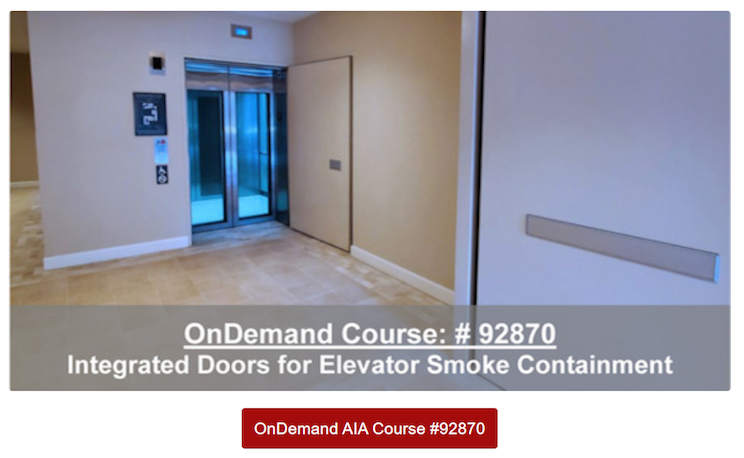
Using Integrated Doors for Elevator Door Smoke Containment
This course explains how to use code-compliant, smoke- and fire-rated integrated doors to effectively compartmentalize smoke and fire in areas such as elevator openings and lobbies. The flexibility of these integrated doors addresses life-safety concerns and can eliminate the need for expensive smoke pressurization systems.
Learning Objectives
- Explain how smoke and fire-rated Integrated Doors comply with national and local smoke and fire codes, and how they help reduce the spread of smoke and fire in elevator shafts and elevator lobbies.
- Additionally, describe the life safety and welfare benefits of using smoke and fire-rated Integrated Doors in various common building types.
- Finally, discuss how design professionals, building owners, and tenants can benefit from incorporating smoke and fire-rated Integrated Doors into their designs and applications.
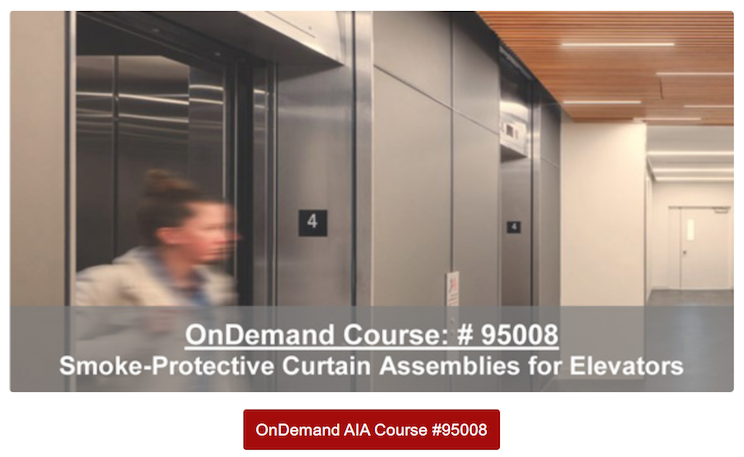
Smoke-Protective Curtain Assemblies for Elevators
This course provides an overview of how to use code-compliant fire-rated smoke curtains to effectively compartmentalize smoke and fire in areas like elevator openings and lobbies. The versatility of fire-rated smoke curtains addresses life-safety concerns and can eliminate the need for expensive smoke pressurization systems or cumbersome smoke doors that may disrupt the layout.
Learning Objectives
- Explain how UL10D Fire-Rated Smoke Curtains meet and exceed both national and local smoke and fire codes, effectively reducing the spread of smoke and fire at elevator shaft openings and in elevator lobbies.
- Discuss the life safety and health benefits of using fire-rated smoke curtains in common building types. Reference the ICC-ES AC77 Report for Elevator Smoke Curtains and its implications for egress safety.
- Highlight how Design Professionals, Building Owners, and Tenants can all benefit from the implementation of fire-rated smoke curtains in various design and application scenarios.
These last two courses enhance participants’ understanding of how elevator shafts and elevator lobbies serve as pathways for dangerous smoke to spread in all types of buildings. That’s why the IBC International Building Code supports the use of smoke- and fire-rated integrated doors or fire protective smoke curtains at these openings.
IBC Section 3006.3 Elevator Hoistway Door Protection
2024 International Building Codes
A Trusted AIA CE Provider in Our Field
Door Systems® is proud to be a leading AIA Continuing Education provider focused on fire-rated smoke containment, integrated fire door systems, and other devices.
Our goal is simple: deliver quality education that helps your team grow and design safer, more compliant buildings.

Knock Out Your Credits This Week
If you’re short on credits or want to avoid the year-end scramble, this is your sign. Pick a course, hit play, and get those CEUs done.
Start your On-Demand AIA courses here: https://doorsysinc.com/aia-courses/
- AIA Provider Number: 40107973
- Have questions or want a recommendation on which course to take first? Reach out anytime: aiacourses@doorsysinc.com | 714-258-7100